Renovating your bathroom can feel like giving your home a spa day – imagine stepping into a sleek, freshly tiled oasis each morning. On the Central Coast, the vibe is coastal and casual, but that doesn’t mean you have to sacrifice style or smarts.
Whether you’re fixing a leaky faucet or gutting the whole loo, planning is key. We’ll walk you through everything from chic design trends to budgeting basics, including local tips (water-saving fixtures!) and must-dos (like checking council rules). By the end, you’ll be armed with ideas and insights to make your bathroom makeover a breeze – and maybe even a boon for your home’s value.
Why Renovate on the Central Coast?
Living on the Central Coast has perks (beaches, BBQs, The Entrance pelican feed), but it also means dealing with salt air and humidity. Old grout can fade and fittings can corrode faster than inland. Choosing a reliable bathroom renovation service not only refreshes your space, it protects against mould and boosts resale appeal. After all, a revamped bathroom can feel as good as a holiday home, right in your own house.
- Add comfort & style. Out with dated linoleum and tired fixtures; in with modern vanities and spa-like showers. A bathroom makeover can turn a mundane space into your favourite room (no joke!).
- Increase home value. A crisp, new bathroom often pays off – one local guide says even an average $9,000 revamp can raise your home’s value by up to $20,000 (that’s almost 20%!) by making it more attractive to buyers.
- Fix problems. Leaks, cracks, or drainage issues? Now’s the time to deal with them. Upgrading pipes and tiles can save you headaches (and money) down the track.
In short, a bathroom renovation on the Central Coast is both practical (moisture-proofing, efficiency) and pleasurable (imagine your morning shower with ocean vibes). Ready to get started? First, let’s sort out your plan and budget.
Planning & Budgeting Your Reno
Before you swing a hammer, take stock of what you really need. Are you updating just the tiles and fixtures, or gutting everything down to the studs? This scope defines your cost and timeline. Here are some quick tips:
- Set a realistic budget. A “mid-range” bathroom revamp typically runs into the thousands of dollars, depending on size and finish choices. For example, even re-tiling a small bathroom can be a few hundred dollars on the material side (tiles cost $300–$1,000+), and labour adds up. If you’re doing a full overhaul (fixtures, cabinetry, plumbing), it’s wise to expect at least $10–15K or more. Remember, splurging on quality fittings (think brass hardware or natural stone) adds longevity.
- Factor in time. Quick cosmetic updates – swapping a vanity, repainting walls – can be done in 2–3 weeks. Bigger jobs (rerouting plumbing, building custom showers, wall demolitions) often take 4–6 weeks or longer. Book tradespeople early and include some buffer – weather or shipping delays happen. Don’t rush: a well-planned schedule avoids late-night DIY panic (and Pinterest fails).
- Think ROI and use. Will you recoup costs? Often yes, at least partially. A top-notch reno can add roughly 10–20% to home value. But even if selling isn’t on your mind, consider what makes you happy. Cozy underfloor heating or a rain-shower head might not show up in the sale price immediately, but they certainly up the daily comfort factor.
| Renovation Scope | Estimated Cost | Typical Timeline | Added Home Value (Approx.) |
|---|---|---|---|
| Cosmetic refresh (paint, new sink/faucets) | ~$2–$5K | ~1–2 weeks | ~5–10% |
| Mid-range remodel (fixtures + re-tiling) | ~$5–$15K | ~2–6 weeks | ~10–20% |
| Full overhaul (gut and rebuild) | $15K+ | 6–10+ weeks | ~20%+ |
Trendy Design Ideas for Your Central Coast Bathroom
Let’s talk looks. Modern bathroom design in Australia is all about bringing nature inside and mixing cozy with chic. Here are some styles and features you might love:
- Earthy, coastal vibes. Warm, organic colours (think terracotta, sand, olive greens) are huge right now. Imagine a feature wall of textured stone-look tiles or clay-toned mosaic that feels like a beachside cliff. Pair those earthy hues with timber vanities or shelves for a relaxed, spa-like feel (and make sure the wood is sealed for the splash zone). Matte black or brushed brass tapware pops beautifully against natural tones. Insert image of a warm-toned bathroom with wooden vanity and matte black faucets here.
- Textured & handmade-look tiles. Not into flat, glossy finishes? Handmade-look or kit-kat (“finger”) tiles can add instant character. These tiles have subtle imperfections and raised surfaces, giving a handcrafted vibe. In practice, a strip of these tiles in the shower niche or as a half-wall creates a striking focal point. They’re especially popular in coastal designs because they mimic sandy ripples or tidal patterns. (Pro tip: subway or square shapes are versatile formats if you want to try this trend.)
- Terrazzo and stone looks. Speckled terrazzo is still going strong. This classic mix of recycled chips (marble, shell, glass) in a concrete or porcelain base can be used on floors, walls, or vanity tops. It’s durable and adds a playful texture. If you prefer a calmer palette, try stone-look porcelain tiles (travertine or slate patterns) for a luxe, natural feel. Picture walking on cool slate floors that feel solid and earthy underfoot – and look at home even with ferns or indoor plants nearby.
- Modern fixtures & tech. Trends aren’t just about tiles. Smart or future-proof features are very on-trend. For example, consider a walk-in (no-barrier) shower or a curbless design – it’s safe, sleek, and makes cleaning easy. A raised-height toilet or sensor-flush model adds luxury and accessibility. These choices mean your bathroom stays stylish and functional for years. And don’t forget gorgeous lighting: avoid fluorescent aging bulbs! Instead, use layered lights (ambient downlights plus LED mirror lights) for that hotel-spa glow.
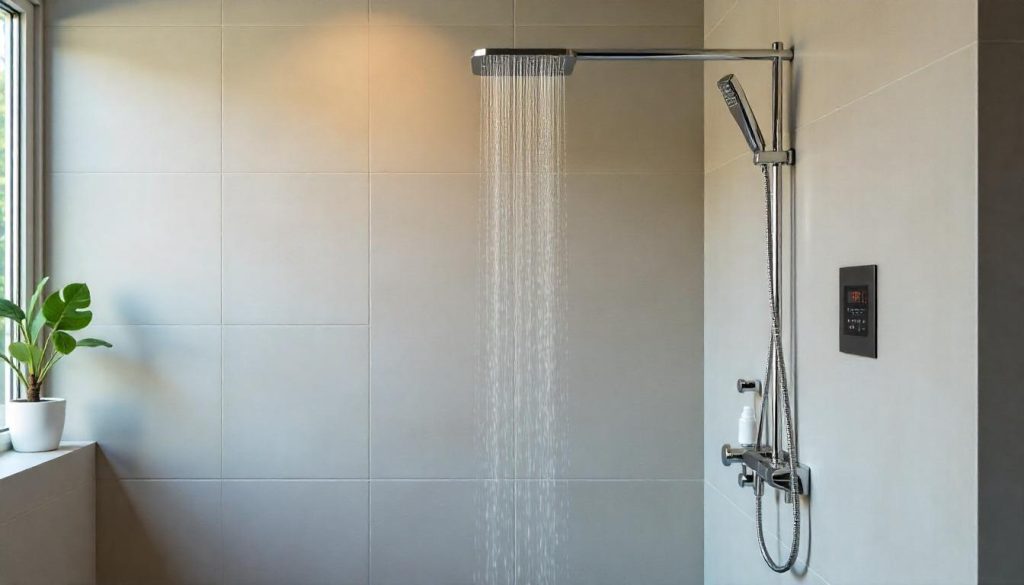
- Showers over baths. With more families and busy folks, shower-only designs are common. A rainfall shower head, double shower heads (for couples!), or a bench built into the shower (for shaving legs or just relaxing) are fantastic options. Even small bathrooms can go shower-only to save space. If you do love a soak, a freestanding tub in a corner can still fit in a large en-suite.
- Bold accents. Don’t be afraid of a pop of color or pattern. A single wall of deep blue or emerald green tile, or a terrazzo mix in warm earth tones, can turn your bathroom into a retreat. Fluted glass shower screens (ribbed glass) are also trending – they gently obscure the view (good privacy) while catching the light in an elegant way. Accent hardware is hot too: brushed gold knobs, rose-gold faucets, or matte-black shower frames will make your space feel custom and cutting-edge.
Eco & Efficiency Upgrades
Since we’re on the sunny Central Coast, it pays to be water-wise and energy-smart in your bathroom design. Small eco-friendly tweaks can save cash and match that relaxed Aussie ethos of “looking after our environment.”
- Water-wise fixtures. A modern 4-star WELS showerhead uses about 6 litres per minute (while older models can gulp 15–20 Lpm!). That means shorter showers feel just as good. Swap taps, showerheads, and toilets for water-efficient ones. The good news: Australian labels (WELS ratings) make it easy to pick. Pro tip: A simple challenge: try to keep showers under 4 minutes – even an egg-timer or your favourite 4-minute song can help. Shorter showers = big savings and you’ll still feel refreshed.
- Fix leaks and waste. Leaky taps or cisterns are like burning money. On average, about 25% of home water goes down the loo. Old toilets might use ~18 L/flush; new dual-flush ones use much less. Check for leaks by adding food dye to the cistern – if color seeps into the bowl, you’ve got a leak. Even something as simple as dropping a water bottle in your cistern can save litres per flush.
- Energy efficiency. A warm, well-lit bathroom is lovely, but pay attention to heating and insulation. Under-tile heating panels can make cold mornings more bearable without blasting the room heater. Good ventilation fans with timers prevent damp and mould (especially important on humid coast). Use LED lights (they use a fraction of energy and last ages).
Permits, Plumbing & Pro Tips
Ah, the fine print: before demo day, make sure you’ve covered the legal and technical stuff.
- Check local regulations. On the Central Coast (like the rest of NSW), many renovations require council approval. According to the Australian Government’s renovation guide (Your Home), larger projects often need a building permit and inspection. Think structural changes or altering plumbing/wiring – you probably need approval. Even if it’s a “simple” reno, check with Central Coast Council or a private certifier. It’s better to be safe: avoiding permit trouble saves headaches (and fines) later.
- Hire licensed pros. Big tasks – plumbing, gas fitting, electrical – are not DIY. The same Your Home guide warns that any major plumbing or electrical work should be done by certified trades. This keeps everyone safe and ensures the job meets code. For example, installing a new shower or moving a toilet is a plumber’s job. A local Central Coast specialist, can handle both plumbing and building needs seamlessly (their team knows the local codes and climate considerations).
- DIY vs hiring out. You can DIY some things (painting, minor demolition, cleanup) if you’re confident. However, weigh your skill level: tile-grouting or waterproof membrane installation errors are ugly and costly to fix. Even assembling a simple vanity can be a bugbear if you haven’t done it before. When in doubt, a pro’s work looks cleaner and faster. Plus, many contractors come with a warranty on their work – peace of mind that a weekend warrior project usually won’t have.
- Aesthetics & practicality. Remember, it’s not just about looks. Waterproofing (especially behind tiles and under baths/showers) is critical in a coastal climate. Your builder or tiler should use quality waterproof membranes. Also plan for storage: niches in showers or extra shelves can keep clutter at bay. Good lighting matters for shaving/makeup, so consider adding downlights over the vanity and sconces by the mirror.
Conclusion
A Central Coast bathroom renovation is an exciting project – think of it as creating a private coastal retreat. By planning carefully (setting a budget, getting permits) and choosing smart, timeless design elements, you’ll end up with a loo that’s both beautiful and practical. Embrace the latest trends (natural textures, spa-like showers, waterwise tech) and don’t shy away from injecting a bit of your personal flair (maybe a funky mosaic or a vintage mirror).
Ready to dive in? Sketch some ideas, collect inspo on Pinterest or Insta, and chat with the pros. Bathroom renovation contractors and seasoned trades can advise on plumbing layout and waterproofing, while your designer or tile shop can help pick that perfect matte-black tapware or pebble tile. With the right team and a splash of your own creativity, you’ll be sipping morning coffee in your dream bathroom before you know it.
Feel free to drop a comment or question – we’d love to hear what style you’re leaning towards. And hey, even if your reno plans are still bubbling in your head, start measuring that mirror area or test drive your decision by tossing a couple of accent towels on the floor. Every little step brings you closer to that fresh, Central Coast-inspired bathroom you deserve!
FAQs About Bathroom Renovations on the Central Coast
How much does a bathroom renovation cost on the Central Coast?
Costs can vary wildly depending on your scope. A basic renovation might set you back $10,000–$15,000, while a high-end upgrade can soar past $30,000. Factors like tile selection, plumbing upgrades, and layout changes all influence the final price.
Do I need council approval for a bathroom renovation on the Central Coast?
Most internal renovations don’t require council approval, especially if you’re not changing the structure or plumbing layout. But if you’re moving walls, altering drainage, or doing major plumbing, you may need to check with your local council. (See NSW Planning Portal for specifics.)
What’s the best layout for a small bathroom renovation?
Maximise floor space by using floating vanities, frameless glass showers, and wall-mounted toilets. Mirrors and light colour palettes also create the illusion of space. A well-thought-out layout can make even the tiniest bathroom feel luxurious.
How long does a bathroom renovation usually take?
On the Central Coast, most bathroom renos take between 2 to 4 weeks, depending on the complexity of the job and availability of trades. Unexpected delays (hello, wet weather or delayed tiles!) can stretch timelines—so always build in a buffer.